
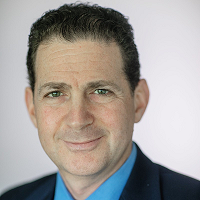
 By Prof. Eyal Zimlichman, Chief Innovation Officer and Chief Medical Officer, Sheba Medical Center
LinkedIn: Eyal Zimlichman, MD
LinkedIn: Sheba Medical Center, Tel Hashomer
Seemingly everywhere you look, a wave of AI layoffs are hitting companies across dozens of industries. Tens of thousands of skilled workers are being let go in the name of administrative efficiency. Yet at the same time, others are finding creative ways to ensure AI enhances workers’ productivity rather than replacing them.
No industry is more ripe for taking advantage of productivity gains for workers while increasing human interaction for consumers than hospitals. And at a moment when patient wait times have risen nearly 50% over the last two decades, time spent with clinicians has dropped significantly, and uncertainty about the future is putting nurses and doctors on edge, the smartest hospitals must seize the opportunity.
The question shouldn’t be how AI can replace doctors, but rather how AI can restore clinicians’ ability to focus on patients. That’s why the smartest hospitals are treating AI as critical infrastructure around that principle instead of a one-to-one substitution for human tasks.
Some of the most promising examples are already showing what this looks like in practice. Companies embedded within hospital systems and working directly alongside clinicians are developing AI tools that improve both outcomes and efficiency at the same time.
A widely deployed clinical AI platform used in nearly 2,000 hospitals worldwide has shown in peer reviewed studies that real time stroke detection can reduce patient mortality by up to 30% by helping clinicians identify and treat life threatening events sooner. A new generation of mental health focused technology is now extending that impact: a patient facing conversational avatar capable of generating clinical summaries, personalizing care plans, and triaging individuals by severity. This mental health AI recently secured regulatory approval in Israel, the first such authorization anywhere in the world for a patient facing system of its kind.
The same shift is beginning to transform cancer diagnostics as well. Today, identifying the right treatment for many cancers often requires sending tissue samples for genetic analysis, a process that can take weeks and carry significant cost. Emerging AI pathology platforms are now partnering with hospitals to identify key biomarkers directly from pathology images in minutes rather than weeks, enabling clinicians to make faster, more informed treatment decisions without additional testing or delays.
These technologies are not replacing clinicians. They are removing bottlenecks so clinicians can spend less time navigating systems and more time treating patients.
That said, even the best AI tools are ineffective if people don’t know how to use them confidently and responsibly. Hospitals must invest as much in training their workforce as they do in the technology itself. At Sheba Medical Center, every new employee, clinical and administrative alike, now undergoes AI training and courses as part of their onboarding. Ultimately, healthcare systems will succeed with AI only if their workers succeed with it first.
The takeaway for other health systems is a shift in mindset. If we can measure AI by how much quality time is returned to workers to do what they do best, we can build a system that is both more technologically advanced and more sustainable. That means giving doctors, nurses, and administrative staff the tools and capacity to think creatively, listen to their patients and peers, and solve problems.
It also requires rethinking workflows instead of just layering on new isolated tools. Technology that sits on top of a broken process will only add friction. So when AI can create connectivity and be directly implemented into workflows, supporting intake, synthesizing information, and preparing clinicians before they even enter the room, it can fundamentally change how care is delivered. The goal isn’t to make clinicians work faster. It’s to make their time more meaningful and allow them to engage with patients more.
Taken together, this is how AI can make better humans, not better computers. In healthcare, that means strengthening the qualities that technology can’t replicate: judgment, empathy, and trust. The foundations of patient-centered care don’t scale as easily as a new chatbot. But they must be protected.
The health systems that succeed in the next decade won’t be the ones that adopt the most AI the fastest. They’ll be the ones who use it deliberately to give clinicians something increasingly rare: the time and space to be present with their patients.