
Tech’s Crucial Role in Quality Payment Program Success
By Justin Barnes – Part 3 of this 4-part series. The path to value-based care and reporting under the new Quality Payment Program is undeniably paved in patient data.
Read More
By Justin Barnes – Part 3 of this 4-part series. The path to value-based care and reporting under the new Quality Payment Program is undeniably paved in patient data.
Read More
By Dr. Vindell Washington – Data is the lifeblood of the value-based payment environment. Every time a doctor takes care of a patient, we have an opportunity to use information in ways that help patients get better care.

By OmniMD – As we have approached the first year for the Quality Payment Program, healthcare professionals need to develop a plan that leverages strong health IT use and health information exchange in order to avoid negative payment adjustments.

By Abhinav Shashank – Physicians have been instrumental to the healthcare industry; and from their perspective, healthcare is changing rapidly. With several new legislations and continued technological developments might have confused providers.

To ensure continued forward movement in adoption of electronic health information exchange and increased interoperability for care coordination, DirectTrust released a list of four recommendations for the new administration.

By William Hyman – The Agency for Healthcare Research and Quality has issued a Funding Opportunity Announcement regarding research on the use of health information technology related to patient outcomes.

By Judah Thornewill, Bob Esterhay MD, Eric C. Schneider MD, Aneesh Chopra & William Yasnoff – While more and more doctors’ offices, hospitals, and other providers are using EHRs, patients rarely have access to their digital health data.
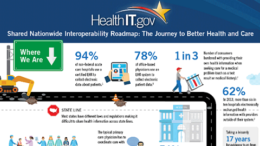
By Lucia Savage & Peyton Isaac – Data shows that individuals expect to be able to access their health information, making it readily accessible and securely shared among their health care providers to support effective clinical decision-making.
By Lucia Savage & Matthew Penn – Electronic health records provide structured clinical data that help public health workers track, mitigate, and eliminate disease. They also offer us the opportunity to improve health.