
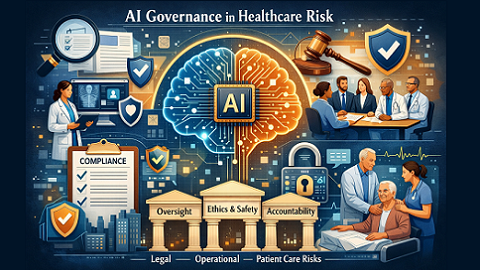
AI Governance

AI in Health Care: The Governance Gap

By Christine Chasse – Artificial intelligence is no longer a future concept in health care; it is already shaping documentation, triage, utilization review, patient communications, clinical decision support, and digital health products. Used well, AI can reduce administrative burden, organize complex information, and help clinicians and patients move through the system more efficiently.

Read More


Why Healthcare AI Systems Fail After Deployment

By Tharun Kumar Nallamothu – Lessons from Real Clinical Environments – Artificial intelligence in healthcare has reached a point where technical capabilities are no longer the primary limitation. Models can transcribe clinical conversations, extract insights, and support decision-making with increasing accuracy.


Responsible AI in Healthcare: Why Governance Can’t Wait

The healthcare industry faces increasing pressure to adopt responsible AI governance. Regulatory bodies are already enforcing compliance with bans, penalties, and lawsuits, as seen in the Rite Aid case and insurance claim denials. The emergence of AI governance debt poses rising risks and costs, increasing exponentially over time.